
Motorcycle Heat Safety: Build a Hydration-and-Break Plan Before the Ride
Plan safer hot-weather motorcycle rides with a practical hydration, gear, route, rest-stop, and stop-riding checklist built around real heat exposure.
Fact-checked against cited official documentation
Reviewed against Fact-checked against MSF summer heat and drinking-water guidance plus Harley-Davidson’s official heat and road-trip planning guidance on gear, water, breaks, and extreme weather..
Last updated October 8, 2026
Hot-weather motorcycling is not a toughness test. It is a planning problem: the rider, route, traffic, gear, water supply, sunlight, and available stops all have to work together. A motorcycle can make a summer day feel manageable at first, especially when it is moving, but the comfort can disappear quickly at a stoplight, in construction traffic, on an exposed highway, or after an unexpected delay.
The aim of motorcycle riding in hot weather safety is not to discover the maximum temperature at which you can force yourself through a ride. It is to create enough margin that you can remain alert, make calm decisions, and end or change the plan before heat turns into a riding hazard.
Manufacturer and training guidance supports that approach. Harley-Davidson’s trip-planning guidance recommends preparing for extreme weather, carrying water and snacks, using frequent rest breaks, and wearing complete protective riding gear. The Motorcycle Safety Foundation also advises riders to consider summer heat’s effect on both the body and the motorcycle, to carry drinking water, and to protect against dehydration. (harley-davidson.com)
This article intentionally avoids a universal water-per-hour formula. Sweat rate, acclimatization, medicines, health conditions, exertion, clothing, humidity, altitude, and ride duration all differ. Instead, use the checklist below to make water accessible, schedule meaningful stops, shorten the plan when conditions stack up, and treat heat symptoms as a reason to stop—not something to ride through.
Start With a Go, Delay, Shorten, or Cancel Decision
Do not begin with the question, “Can I ride?” Start with, “What would make this ride less forgiving than usual?” Heat becomes more consequential when it combines with other demands: a long day, little shade, slow traffic, a passenger, heavy luggage, an unfamiliar route, poor sleep, hard off-road work, or a group pace that is faster than you would choose alone.
Look beyond the air-temperature number. A route through open pavement, dry terrain, stop-and-go city traffic, or low-speed trails can feel far hotter than the forecast suggests. Direct sun, reflected heat from pavement, wind that feels more like a hair dryer, and a helmet or jacket that cannot be adjusted comfortably all reduce your margin. Heat can also be uneven along a route. A cool start in the hills does not guarantee that the lower-elevation return leg will be equally manageable.
Use the forecast as a planning cue, not permission. Check the timing of the hottest part of the day, the route’s shade and services, and whether the forecast could leave you far from air-conditioned shelter. If the ride crosses remote areas, make your water and stop plan more conservative. If severe heat is expected, an earlier departure, a shorter loop, a destination closer to services, or a different day can be the strongest safety decision.
A useful way to make the call is to rate four conditions:
| Planning factor | Lower-demand example | Higher-demand example | Safer response when demand is high |
|---|---|---|---|
| Heat exposure | Early ride with shade and mild conditions | Midday sun, hot pavement, little cover | Start earlier, shorten the route, or postpone |
| Route support | Frequent fuel, water, and indoor stops | Remote roads or isolated trails | Carry a larger reserve and define a turnaround point |
| Riding workload | Familiar pavement at a relaxed pace | Traffic, gravel, technical terrain, or group pressure | Reduce distance and leave more time for breaks |
| Rider readiness | Rested, fed, and feeling normal | Poor sleep, illness, fatigue, alcohol aftereffects, or new medication | Delay the ride or choose a low-commitment alternative |
| Motorcycle condition | Manual reviewed and normal operation | Existing temperature warning or unresolved maintenance concern | Address the concern before a heat-exposed ride |
The table is not a scoring system that makes risk acceptable once a number is reached. It is a conversation with yourself. Several higher-demand factors at once should change the ride plan. A short ride to a shaded destination may remain reasonable; a long, exposed, tightly timed ride may not.
If you are riding with other people, say the plan aloud before leaving: where breaks will happen, who carries water, what happens if someone needs to stop, and whether anyone can leave the group without having to “catch up.” A group that treats breaks as normal makes heat decisions easier. A group that treats them as weakness makes every rider less safe.
Build Hydration Access, Not a Guesswork Drinking Target
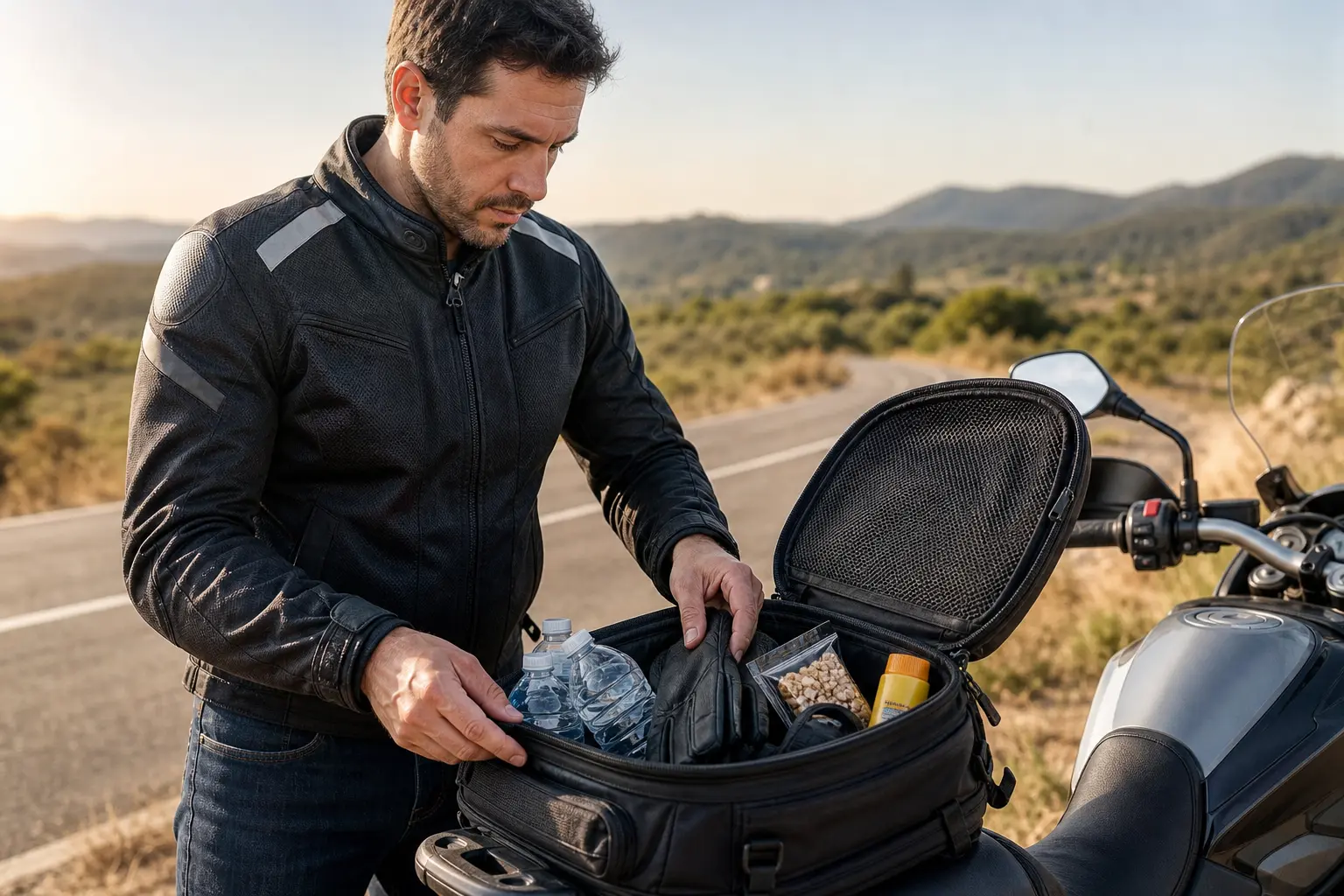
Hydration is most useful when it is accessible before the rider feels badly enough to make a poor decision. Water buried at the bottom of luggage, a convenience store assumed to be open, or one bottle shared among several riders is not a hydration plan. Put drinking water where it can be reached at every planned stop, and bring a reserve that does not depend on the next business being open.
The Motorcycle Safety Foundation specifically advises carrying drinking water and protecting against dehydration in summer conditions. (msf-usa.org) Harley-Davidson’s road-trip guidance likewise lists water and snacks as practical supplies and links hydration with alertness and frequent rest breaks. (harley-davidson.com) Those points matter because the riding task requires continuous observation, judgment, throttle and brake control, and route awareness. A rider who is overheating or fading does not have the same decision margin as a rider who is cool, rested, and prepared.
Before departure, fill your primary drinking system. That may be bottles in an easy-to-reach bag, a hydration reservoir, or another secure setup that does not interfere with control operation, clothing, or emergency movement. Confirm that it is actually usable with your gloves and luggage in place. If you cannot reach it until a stop, that can still work—provided the stops are planned rather than improvised.
Bring a separate contingency supply. Its purpose is not to encourage an unnecessarily long ride. It exists for road closures, missed turns, a passenger’s needs, a delayed fuel stop, a mechanical pause, or an unexpectedly hot section. Keep it protected from leakage and secure it in accordance with the motorcycle’s luggage and load guidance. Do not let a hydration setup become loose cargo or a distraction.
Food deserves a place in the plan as well. A simple, familiar snack can make a break more effective than water alone when a rider has gone too long without eating. Avoid treating highly caffeinated drinks, alcohol, or unfamiliar supplements as substitutes for a hydration-and-rest plan. They can complicate how you feel, and they do not solve accumulated heat exposure.
Pay attention to the practical signs that your plan is failing. Are you avoiding drinking because the water is unpleasantly warm? Are you delaying a stop because the group wants to continue? Have you started thinking about the next refill point more than the road ahead? These are route-management problems. Correct them by stopping, changing the route, or ending the ride—not by promising yourself you will handle it later.
For a passenger, make an independent plan. A passenger may have different heat tolerance, less airflow, fewer opportunities to shift position, and less ability to see a problem developing. Agree on a simple signal that means “next safe stop,” with no debate required. If the passenger needs a stop, the ride needs a stop.
Choose Gear That Protects While Supporting Comfort
Hot-weather protection is not simply a matter of wearing as little as possible. Road rash protection, eye protection, gloves, boots, helmet fit, sun exposure, ventilation, and the ability to operate the motorcycle all remain important. Harley-Davidson’s road-trip guidance recommends complete riding gear—helmet, eye protection, jacket, pants, gloves, and boots—and notes that layers and a mesh jacket can improve comfort in hot weather. (harley-davidson.com)
Begin with the gear that your motorcycle manufacturer, your helmet and apparel makers, and applicable laws require or recommend. Then adapt the setup for heat without sacrificing the ability to ride safely. Ventilated protective apparel may be useful if it fits correctly, stays securely closed, and preserves impact and abrasion protection appropriate to your ride. A breathable layer under the outer gear can reduce the sticky, distracted feeling that makes a long hot day harder, but test it on a short ride first.
Coverage matters. Sunburn, hot surfaces, and wind-dried skin can turn an ordinary ride into a miserable one. Use sunscreen on skin that remains exposed, following its label instructions. Do not assume a short sleeve, open collar, or gap at the wrist will stay protected after hours in direct sun. A neck covering or base layer may be more practical than repeatedly trying to apply product on a roadside shoulder.
Keep the helmet setup simple and safe. Use eye protection appropriate to the changing light, keep the shield clean, and make sure ventilation adjustments can be made without taking attention from traffic. Do not compromise helmet fit for airflow. A loose helmet, open chin strap, or improvised alteration is not a heat-management solution.
Cooling products can be considered comfort tools, not guarantees. If you use a cooling vest, wet layer, neck wrap, or similar item, test it locally before relying on it for a long ride. Confirm it works with the jacket, does not restrict mobility, does not chafe, and does not distract you. Most importantly, do not interpret a temporary cooling sensation as a reason to ignore water, rest, or warning symptoms.
Also plan for the moment after you stop. A spare dry base layer, small towel, sunscreen, and a change of socks may make a planned break much more restorative. The goal is to return to the motorcycle feeling more alert than when you arrived, not simply to check a box and continue.
Put Breaks Into the Route Before You Leave
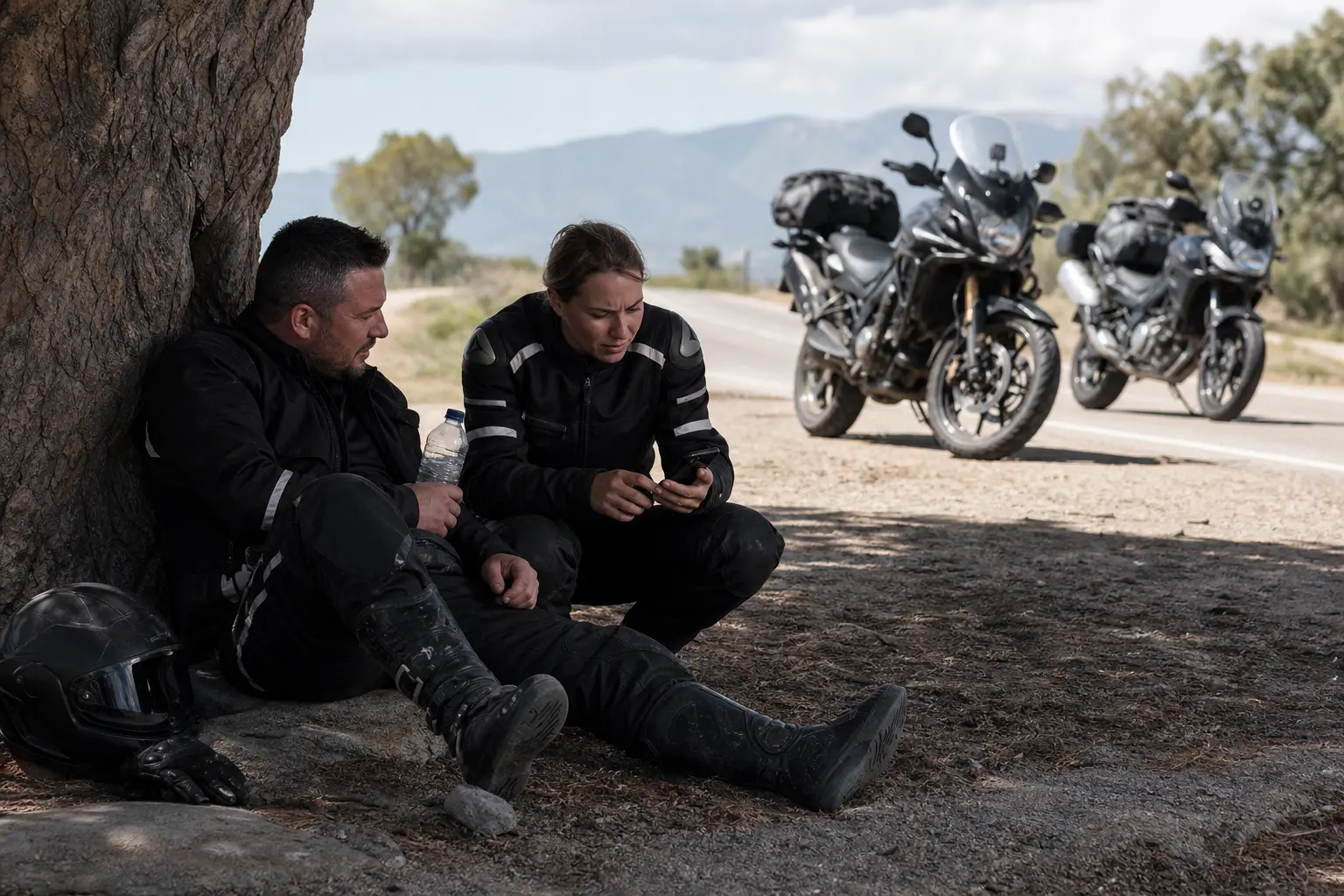
A real heat break is more than standing beside the motorcycle while checking messages. It is a planned interruption in heat exposure at a place where you can drink, eat if needed, reassess the route, and decide whether continuing is still sensible.
Mark several types of stops before leaving: a primary stop, an earlier backup stop, and a bail-out option. The primary stop might be a fuel station, café, visitor center, rest area, or another reliable location. The backup is useful if traffic is slower than expected or someone needs relief sooner. The bail-out point is where the ride can become a shorter loop, a direct return, a pickup plan, or an overnight stay without turning it into a failure.
Harley-Davidson’s travel guidance recommends preparing for extreme heat or cold, packing water and snacks, and planning frequent rest breaks. (harley-davidson.com) Translate that broad advice into a route rule: you should know the next safe stop before you need it. Navigation is not a substitute for that rule. Maps can route around a closure, but they cannot promise shade, open services, or a comfortable place to recover.
Keep your breaks flexible. A rigid plan that says you are “not due” for a stop can become a trap when conditions change. Stop early if traffic has been slow, the pavement has felt unusually hot, gear has become uncomfortable, a rider has stopped drinking, or anyone seems quieter, clumsier, or less engaged than normal. You do not need to diagnose the reason while moving. You only need to create a safe opportunity to assess it.
At the stop, use a short reset routine:
- Park in a stable, safe location away from active traffic.
- Take off or open only the gear necessary to cool comfortably while maintaining awareness of the surroundings.
- Drink, eat if appropriate, and move into shade or air conditioning when available.
- Ask a direct question: “Do you feel fully clear, steady, and ready to ride?”
- Check the route ahead for delays, construction, changing weather, and the next stop.
- Choose to continue, shorten, wait, or end the ride without treating any answer as a loss.
For remote or off-highway rides, strengthen the communication plan. The MSF guide advises riders to tell someone where they are going and when they plan to return, and it notes the value of riding with others so assistance is available if trouble occurs. (msf-usa.org) Do not rely on cell coverage. Share the route, turnaround intention, and return window before departure; agree on what the person at home should do if you miss the check-in.
Recognize the Signs That Mean the Ride Should End
The most important heat skill is not endurance. It is recognizing that your condition has moved from “uncomfortable” to “unsafe to continue.” Harley-Davidson Insurance’s motorcycle heat guidance lists warning signs including weakness, fatigue, dizziness, nausea, confusion, cramps, altered sweating, and rapid breathing, and it directs a rider experiencing symptoms to get off the road immediately. (insurance.harley-davidson.com)
For riders, several symptoms deserve a conservative response because they directly affect safe operation: dizziness, confusion, blurred or altered vision, unsteadiness, unusual clumsiness, nausea, severe fatigue, cramping, and a feeling that you cannot concentrate on ordinary traffic decisions. Do not negotiate with these symptoms while riding. Do not try to “make it to the next town” if there is a nearer safe place to stop.
When you notice a warning sign, make the next task simple: reduce the demands of the ride and get to the nearest safe stopping place without rushing. Once stopped, seek shade or air conditioning, cool down, drink, and ask for help if symptoms are severe, worsen, or do not improve. Confusion, fainting, collapse, or a person who cannot safely care for themselves is an emergency; call emergency services rather than attempting to continue the ride.
Do not resume merely because you have cooled off for a few minutes or because the group is ready to leave. Resume only if you feel entirely normal, clear-headed, coordinated, hydrated, and willing to choose a lower-demand route. In many cases, the safer decision is to end the ride, arrange a pickup, wait for cooler conditions, or stay overnight. The motorcycle can be recovered later. Your ability to make sound decisions cannot be assumed once heat illness has begun.
Watch your companions, too. Heat can make people minimize what they feel. A rider who misses turns, forgets agreed plans, struggles with a routine task, rides erratically, becomes unusually irritable, or repeatedly says they are “fine” while looking unwell may need a stop. Use calm, specific language: “You seem off. We are stopping at the next safe place.” That is more helpful than debating whether the rider is tough enough to continue.
Respect the Motorcycle’s Limits Without Ignoring Your Own
Heat management includes the motorcycle, but rider safety comes first. The MSF advises being conscious of heat’s effects on the engine and body and ensuring oil, coolant, and lubrication levels are sufficient. (msf-usa.org) The correct service requirements, fluid specifications, warning indicators, and operating limits are specific to the motorcycle. Follow your exact owner’s manual rather than applying another model’s temperature number, fluid type, or maintenance interval.
Before a hot ride, complete a normal pre-ride check. Look for leaks, confirm the controls and lights are operating normally, inspect tires according to the manufacturer’s instructions, and check any fluid level the owner’s manual identifies as rider-serviceable. If the motorcycle already has a warning light, a temperature concern, a leak, an unusual smell, or a known cooling-system issue, do not use a heat-exposed ride as the test case. Arrange appropriate inspection or service.
During a slow traffic delay, pay attention to the instrument panel and any manufacturer instructions for that situation. Do not override warnings, defeat safety systems, or improvise a repair at roadside. If the motorcycle indicates a problem or begins behaving abnormally, prioritize getting yourself to a safe place. Then follow the manual’s guidance and seek qualified assistance if the issue is not clearly resolved by the manufacturer’s normal operating instructions.
A well-maintained motorcycle supports the plan, but it does not make the rider heat-proof. A perfect coolant level cannot correct dehydration; a powerful fan cannot replace a shaded rest stop; and a temperature gauge cannot tell you whether your judgment is fading. Keep the two decisions separate: whether the motorcycle is operating normally, and whether you are fit to continue.
For a broader, model-first planning routine before seasonal rides, see the Motorcycle Maintenance Guide.
Hot-Weather Motorcycle Ride Checklist
Use this checklist the evening before, then repeat the short version immediately before departure.
- Check the forecast for the whole riding window, including the expected hottest period and any route-area differences.
- Decide whether the route should start earlier, become shorter, include more shade, or move to another day.
- Identify a primary rest stop, an earlier backup stop, and a point where you can easily turn back or end the ride.
- Fill your primary drinking supply and pack a separate reserve that is secured and accessible at stops.
- Bring familiar snacks, required medication, sunscreen, and any personal items that support comfort during a break.
- Wear complete protective gear that fits correctly and has been tested for warm conditions; do not trade core protection for momentary comfort.
- Confirm that helmet ventilation, eye protection, gloves, and closures can be managed safely.
- Review the owner’s manual guidance relevant to hot operation; do not guess at fluid, cooling-system, or warning-light requirements.
- Complete your normal pre-ride inspection and do not leave with an unresolved warning, leak, or abnormal condition.
- Tell a trusted person your route, destination, turnaround plan, and expected return time for longer or remote rides.
- If riding in a group, agree that anyone can call an early break or leave the ride without pressure.
- At every stop, ask whether you are alert, steady, comfortable enough to focus, and genuinely willing to continue.
- End the ride if heat symptoms appear, if the next reliable stop is too far away, or if the plan depends on “pushing through.”
How Vojo Helps
Create a summer ride entry in Vojo before departure, then add the planned route, primary and backup break locations, a turnaround point, and a note stating what symptoms mean the ride ends. In the same workflow, log your pre-ride check and set a reminder to review the motorcycle’s manual-specified maintenance items before the next long hot-weather trip. After the ride, save what actually worked—departure time, water carried, stops used, traffic delays, and whether the route felt too exposed—so the next plan is based on your experience rather than optimism. Use the motorcycle ride app to keep the route and ride notes together.
Download Vojo on the App Store
Final Takeaway
A hydration-and-break plan is not extra admin for a summer motorcycle ride. It is part of the ride itself. Carry water that is truly available, choose protective gear that you can comfortably use, plan stops before you are desperate for them, follow your motorcycle’s manufacturer guidance, and keep the freedom to shorten or end the day.
The safest hot-weather ride often looks less dramatic than the original plan: an early start, a shorter loop, one more break, a shaded lunch, a slower pace, or a return before the afternoon heat peaks. Those choices protect the attention and judgment that make every mile possible.
Quick answers
Frequently asked questions
Is there one temperature that is always too hot to ride a motorcycle?
No single air temperature answers that for every rider or route. Consider forecast timing, direct sun, traffic, humidity, route remoteness, protective gear, your condition, and whether you can reach reliable cooling and water stops. When those demands stack up, shorten, delay, or cancel the ride.
How should I carry water on a hot motorcycle ride?
Use a secure, easy-to-access setup that does not interfere with controls or movement, plus a separate reserve for delays. Test the system on a short ride and make sure water is available at planned stops rather than buried beneath luggage.
Should I wear less gear when it is extremely hot?
Do not abandon core protection for heat relief. Start with complete, properly fitted protective gear, then choose warm-weather-capable layers and ventilation that preserve safe movement and coverage. Harley-Davidson’s trip guidance identifies helmet, eye protection, jacket, pants, gloves, and boots as essential riding gear.
What heat symptoms mean I should stop riding?
Stop at the nearest safe place for dizziness, confusion, nausea, unusual weakness, cramping, impaired concentration, altered vision, or unsteadiness. Do not resume until you are completely clear and well. Seek emergency help for severe symptoms, fainting, collapse, or confusion that persists.
How often should I plan rest breaks in hot weather?
Use route conditions and rider feedback rather than one rigid interval. Place a primary stop and an earlier backup stop before departure. Stop sooner after slow traffic, intense sun, exertion, missed hydration, or any sign that a rider is less alert than normal.