
Motorcycle Eye Protection at Dusk and After Dark: Clear Vision Without the Tinted-Lens Mistake
Motorcycle eye protection at night needs a clear, clean, securely fitted shield or goggles. Use this practical dusk-to-dark checklist to avoid tinted-lens mistakes.
Fact-checked against cited official documentation
Reviewed against Fact-checked against MSF guidance on clear night lenses, impact-resistant scratch-free face protection, eyewear accommodation, and pre-ride safety habits..
Last updated October 8, 2026
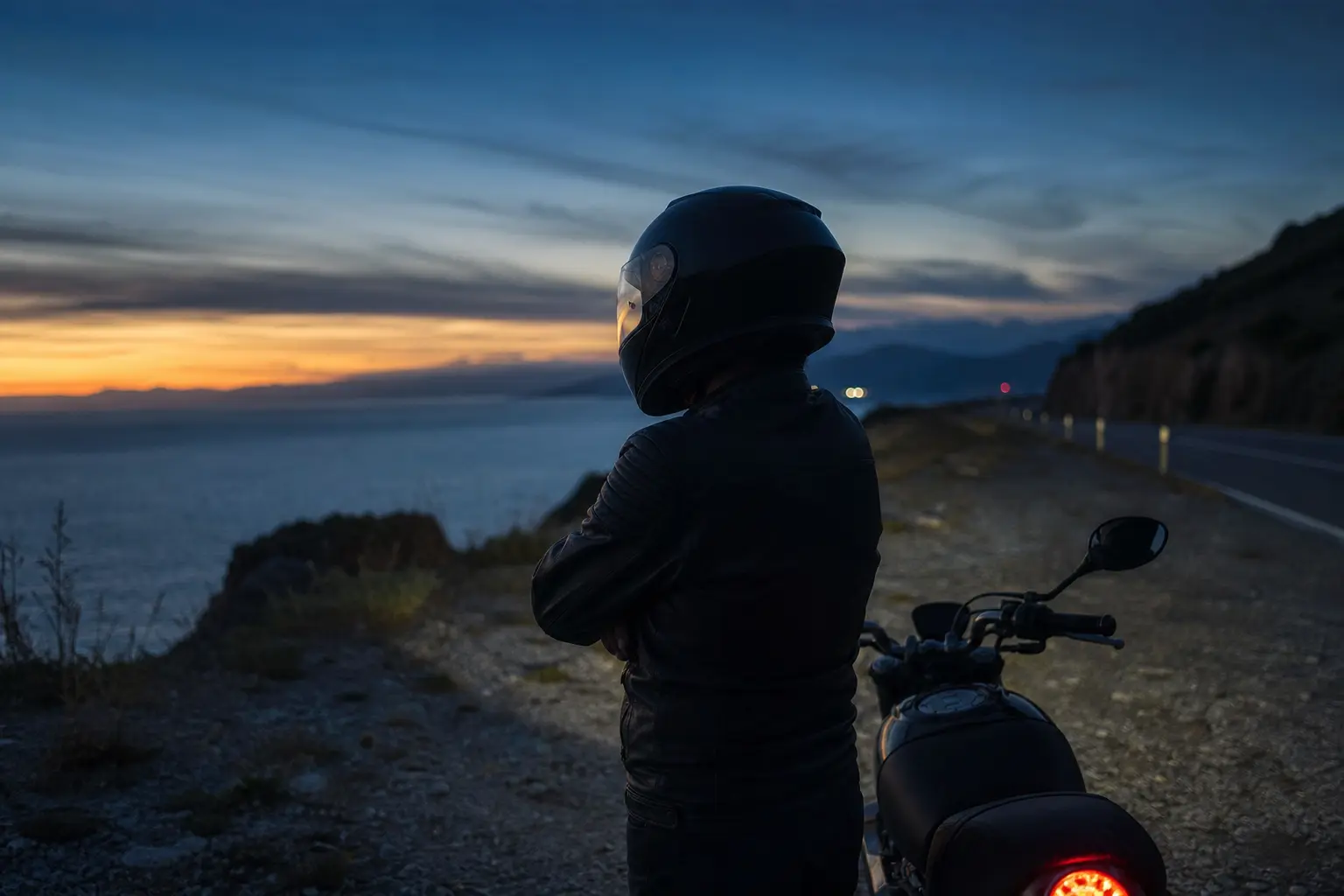
Dusk creates a deceptively difficult riding environment. It may still feel like daytime when you leave home, yet the light can drop quickly during the ride. A lens that was comfortable in bright sun can become an unnecessary barrier just as roadway detail, surface changes, animals, pedestrians, and other road users become harder to pick out.
That is why motorcycle eye protection at night is not simply a matter of wearing something over your eyes. The protection has to preserve a useful view, stay in place, resist the airborne hazards of riding, and remain clean enough that glare and reflections do not take over your attention.
The Motorcycle Safety Foundation (MSF) treats face or eye protection as part of the right gear for a ride. Its Motorcycle Operator Manual also warns that tinted eye protection should not be used when little outside light is available. (msf-usa.org) The practical takeaway is straightforward: if your ride may continue into limited light, plan around clear eye protection from the beginning rather than hoping a tinted lens will remain usable.
This guide is deliberately conservative. It does not tell you to push through impaired vision, improvise a damaged shield, or treat eyewear as a substitute for judgment. Instead, it gives you a repeatable way to choose, inspect, carry, and use eye protection before dusk becomes darkness.
Start With the Manufacturer-First Baseline
Begin with your helmet manufacturer’s guidance for compatible face shields, eyewear accommodation, fastening hardware, cleaning products, and replacement parts. A shield is not a generic pane of plastic: its shape, mounting points, closing mechanism, and sealing behavior are part of the helmet system as designed. If your helmet documentation identifies approved shields or care limits, follow that documentation rather than relying on online shortcuts.
If you use goggles, begin with the goggle maker’s fit and care instructions, then confirm they work with your helmet without creating pressure points, lifting the helmet, interfering with the helmet opening, or becoming loose in airflow. The correct setup is the one that remains secure and usable when you turn your head, look over your shoulder, and move through normal riding posture.
MSF guidance describes face shields and goggles as protection from wind, insects, and debris, and says they should be impact-resistant and free of scratches. (msf-usa.org) Those two qualities matter especially at night:
- Impact resistance addresses the fact that the road environment can throw small objects toward your face.
- A scratch-free viewing area helps preserve a clean image when headlights, streetlights, wet pavement, and reflective signs are all competing for your attention.
- Secure retention keeps the protection from shifting when wind pressure rises or when you make a quick head check.
- Compatibility with your own eyewear, if needed, prevents an otherwise good shield or goggle from becoming distracting or painful.
The point is not to find one universal product category. A full-face helmet with a clear compatible face shield may suit one rider. Another may use an approved open-face setup with securely fitted goggles. What should not change is the decision standard: protection must be clear enough for limited light, secure enough for riding, and in good enough condition to avoid becoming a visual problem itself.
For the broader habit of checking gear and motorcycle condition together, see the Motorcycle Maintenance Guide.
Why the Tinted-Lens Mistake Gets Worse at Dusk
Tinted eye protection can feel normal when the sun is high. The problem is that sunset is not a fixed switch between bright and dark. Light often changes across neighborhoods, tree cover, weather, elevation, traffic, and the direction you are traveling. A low sun behind you can make a lens seem acceptable, then a shaded road or an oncoming headlight can reveal how much useful visual information it removes.
The MSF’s guidance is clear: use clear lenses at night, and do not use tinted eye protection when outside light is limited. (msf-usa.org) This is not a style preference. It is a margin-preservation choice.
A tinted lens may make a bright scene feel less harsh, but it cannot create detail that the surrounding light no longer provides. As natural light falls, the rider needs to identify more with less: the edge of a lane, a patched section of pavement, a vehicle waiting to turn, a driveway, an animal near the shoulder, or a change in the road’s surface texture. Adding a dark filter in that moment can make the rider slower to recognize what deserves attention.
The risk is not limited to fully dark lenses. Any lens that noticeably reduces the available scene can be the wrong choice once the ride is heading into low light. Do not make the decision based on whether you can still “basically see.” Make it based on whether the protection supports a relaxed, reliable view of the road and your surroundings without forcing you to squint, strain, guess, or sit unusually close to other traffic.
Dusk also amplifies glare. A scratched, smeared, dusty, or bug-marked shield can scatter light from headlights and lamps across the viewing area. The resulting visual clutter may be more distracting than the scratch looked in a garage or daylight parking lot. A minor mark that seems harmless under overhead lighting can be very noticeable once it catches an approaching headlight.
A safer rule is simple: when the ride can extend into limited light, install or pack clear eye protection before departure. Do not wait until your vision is already compromised at the roadside. Changing gear under pressure, in traffic, or after dark encourages rushed decisions and creates an unnecessary exposure period.
Choose the Protection Type Around Your Actual Ride
The best choice depends on your helmet, your vision needs, your route, and what you can maintain in good condition. Do not decide only by appearance or by what worked during a short daytime ride.
Clear face shield
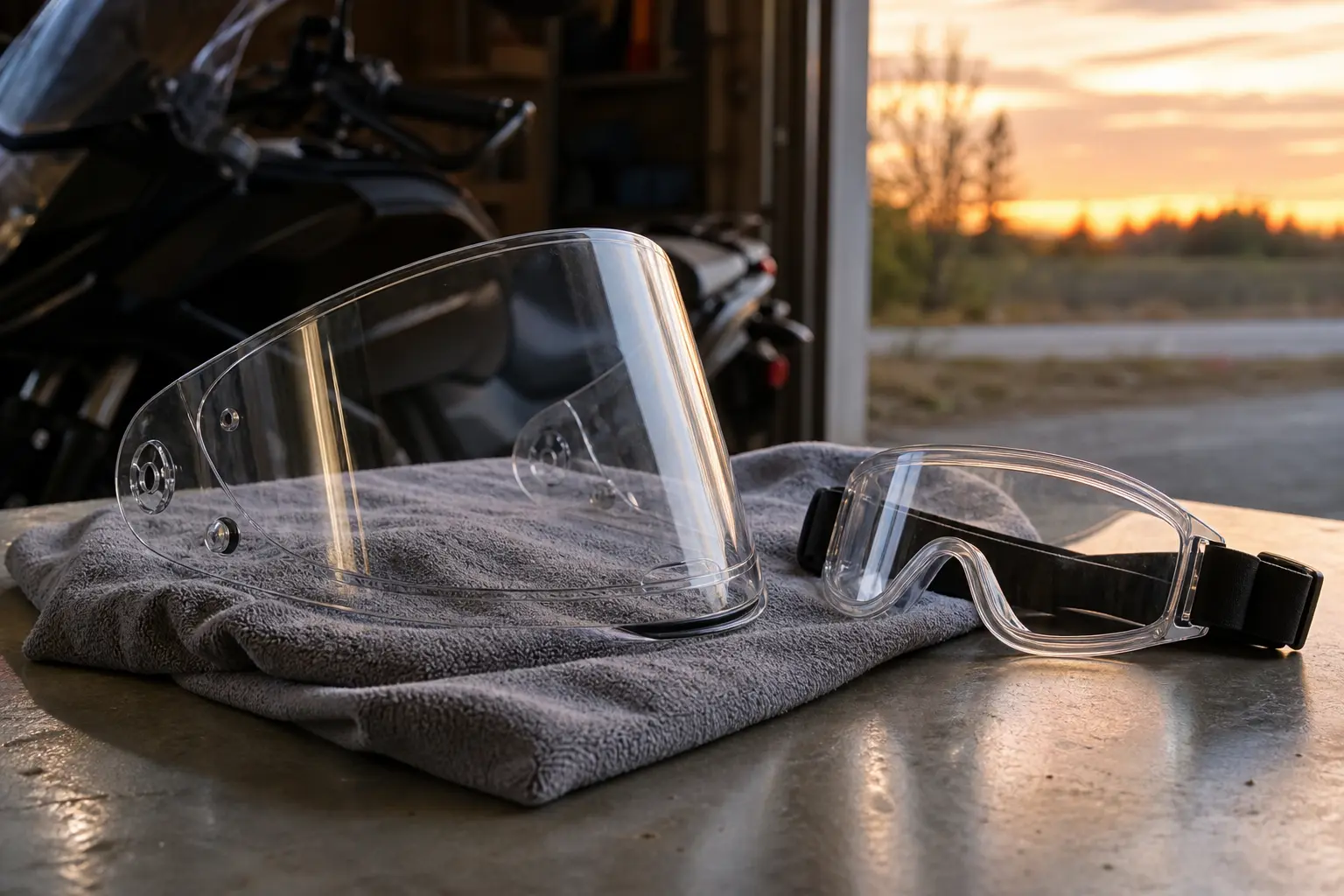
A clear face shield can offer continuous coverage across the front of the helmet. It may be the most practical option for riders whose helmets are designed for one, especially when the shield closes securely and gives an undistorted view. MSF notes that a face shield should be designed for the helmet, securely fastened, impact-resistant, and free of scratches. (msf-usa.org)
Before a dusk ride, assess whether the shield opens and closes normally, latches as intended, and sits where it should without wobble. Confirm that its usable viewing area is clear, rather than focusing only on whether the outer edges look acceptable. A deep scratch, haze, or residue directly ahead matters more than a cosmetic mark near an edge, but any defect that catches light or pulls your focus deserves a cautious decision.
Goggles
Goggles can provide eye protection for helmet configurations intended to use them. They need to be securely held in place and should not create a gap, pressure point, or instability that becomes worse at speed. MSF notes that goggles provide eye protection but do not provide the same coverage for other parts of the face as a full-face helmet and face shield. (msf-usa.org)
For dusk and after-dark riding, clear goggles are the baseline. Check the lens for scratches, cloudiness, contamination, loose parts, or a strap that no longer holds reliably. Also consider whether the goggle frame restricts your useful peripheral view or conflicts with the helmet’s opening. If you find yourself constantly adjusting goggles while parked, do not assume they will settle down once the wind is pushing on them.
Prescription eyewear behind a shield or goggles
If you need prescription glasses or another vision aid, make compatibility a non-negotiable part of the system. The MSF Motorcycle Operator Manual says eye or face protection should permit enough room for eyeglasses or sunglasses when needed. (msf-usa.org)
That means checking the whole arrangement while seated on the motorcycle: helmet on, glasses in place, shield or goggles installed, chin strap secured. Look left, right, down toward the instruments, and through the range you use for shoulder checks. Notice whether the glasses’ temples create painful pressure, whether they are pushed out of their natural position, and whether the shield or goggles can close securely.
Do not substitute ordinary sunglasses for motorcycle eye protection at night. Sunglasses are tinted, and regular eyewear alone may not supply the wind and debris protection of a proper face shield or goggles. If you use a prescription insert or another integrated solution, follow its manufacturer’s instructions and decide based on its night suitability, fit, and condition.
The Pre-Ride Eye-Protection Check
A good gear check should be brief enough that you actually do it, but thorough enough to catch a bad setup before the road adds speed, wind, vibration, glare, and time pressure. Do it while parked in adequate light, before gloves and helmet make small details harder to handle.
| Check area | What to look for | Conservative decision |
|---|---|---|
| Lens tint | Any tint or dark lens planned for limited light | Change to clear protection before leaving |
| Viewing area | Scratches, haze, dried insects, streaks, residue, or chips where you look ahead | Clean according to maker guidance; replace or postpone if vision remains compromised |
| Shield hardware | Secure mounting, normal movement, intended closing and retention | Do not ride after dark with loose, damaged, or unreliable hardware |
| Goggle retention | Strap condition, stable fit, no tendency to lift or shift | Use another approved setup if the goggles cannot stay secure |
| Optical clarity | Distortion, distracting reflections, or a view that feels uneven | Choose a clearer, compatible option |
| Eyewear compatibility | Room for necessary prescription glasses and a natural fit | Do not force components together or accept painful pressure |
| Fogging readiness | Whether the system is already misting while parked | Address the cause using manufacturer-approved guidance before the ride |
| Route and timing | Whether the trip could run later than planned or through unlit roads | Pack or install clear protection and allow more time |
This is not a repair inspection. You are not trying to diagnose every cause of a sticky mechanism or cloudy lens at the curb. You are making a ride/no-ride or change-the-gear decision. If the protection cannot give you a stable and clear view, it is not ready for a low-light ride.
Night Eye-Protection Checklist
Use this checklist before any ride that begins near sunset, may run late, or includes tunnels, heavy tree cover, rain, or poorly lit roads.
- Read the plan, not just the sky. Check when you expect to return, whether the route includes rural or unlit sections, and whether delays could put you in darkness.
- Use clear eye protection for limited light. Remove tinted shields, tinted goggles, and dark eyewear before the ride transitions into dusk.
- Confirm your helmet and eye protection are compatible. Follow the helmet and eyewear manufacturers’ guidance for the parts you are using.
- Inspect the forward viewing zone. Look for scratches, haze, grime, dried insects, smears, or distortion where you normally look down the road.
- Check security. Confirm the face shield is attached and retained as intended, or that goggles and their strap stay secure through normal head movement.
- Test your natural head movement. With the helmet fastened, make normal shoulder-check and instrument-check motions. Nothing should shift, bind, pinch, or obstruct the view you rely on.
- Confirm prescription-eyewear comfort if applicable. Your glasses should sit normally; the shield or goggles should not press them into an awkward position.
- Address fogging before departure. Follow product instructions for ventilation and approved care. If the setup repeatedly fogs while parked, do not assume moving air will solve it safely.
- Carry a clear contingency only if you can use it safely. A clean, compatible clear shield or goggles can help when the return trip is uncertain. Pack it where it will stay protected from scratches.
- Slow the plan, not just the bike. Give yourself extra travel time so you are not tempted to ride faster or continue when vision deteriorates.
- Know the stop point. Decide in advance that worsening fog, glare, lens contamination, eye watering, or reduced confidence in what you are seeing means finding a safe place to stop.
The checklist does not guarantee safe riding. It helps remove predictable, avoidable problems before you add the uncertainty of traffic and night conditions.
Fit and Vision: What “Good Enough” Should Feel Like
Eye protection should not demand constant attention. If it does, it is taking attention away from traffic, lane position, road surface, and escape options.
A workable nighttime setup generally feels uneventful. You can look through it without noticing optical distortion. You can turn your head without the shield lifting, goggles moving, or prescription glasses shifting. You can breathe normally without rapid fogging. You do not need to hold a particular head angle to get a usable view.
Warning signs are usually obvious once you stop excusing them:
- You keep raising or lowering the shield to find a clear patch.
- A headlight turns ordinary scratches into bright lines or starbursts.
- Goggles creep upward, bounce, or press hard against your nose or glasses.
- Your eyes water from wind getting behind the protection.
- The lens fogs repeatedly or becomes hazy despite following its care guidance.
- You notice doubled edges, warped road lines, or a sensation that your eyes cannot settle.
- You are tempted to ride with the face shield open because the closed position is uncomfortable or unclear.
Do not normalize these signals simply because the gear is expensive, recently bought, or usually fine in daylight. Low light changes the performance demand. The question is not whether the setup can be worn. The question is whether it supports clear observation when your margin is already reduced.
If you are shopping for a new helmet or shield system, bring the vision correction you actually ride with and try the arrangement as a whole. Fasten the helmet, simulate your normal upright posture, and make the head motions you use at intersections and lane changes. Evaluate clarity and pressure without a tinted lens masking the result. A daytime showroom fit check cannot duplicate a night ride, but it can reveal obvious incompatibility before you commit.
Cleanliness Is a Night-Riding Safety Issue, Not a Cosmetic One
A clean shield or goggle lens is easier to overlook than a cracked part because it seems temporary. Yet contamination can become highly distracting at dusk. Bug residue, road film, fingerprints, dust, and dried water marks may scatter incoming light. That can pull attention toward the lens itself rather than the scene beyond it.
Use only the care method and products permitted by the eye-protection manufacturer. Different materials and coatings can have different limits, and aggressive cleaning habits can leave the surface worse than it was. Avoid treating a convenience wipe, household chemical, abrasive cloth, or random solvent as automatically safe for a shield or lens.
The goal is not perfection under a flashlight. The goal is a clear, non-distracting view under the lighting you are about to encounter. After cleaning, look through the lens toward an outdoor scene and then toward a controlled bright light source from a safe, stationary position. If the surface throws noticeable glare, streaks, or distortion into your forward view, treat that as a reason to use a better clear option or delay the ride.
Protect spare clear lenses and shields while they are stored. A loose item in a luggage compartment, garage shelf, or backpack can collect scratches that only become obvious at night. A soft protective storage method, used according to the product maker’s guidance, is a small habit that can preserve an important fallback option.
Adjust the Ride When Your Vision Margin Is Smaller
Clear eye protection is essential for limited light, but it does not turn night riding into daytime riding. Even with a clean, clear, secure setup, reduce the pressure on your eyes and decision-making.
First, make your pace fit what you can actually see. This is not about matching the speed of vehicles around you or trying to maintain a daytime schedule. It is about maintaining enough time and distance to recognize a hazard, choose a response, and act smoothly. If glare, rain, fatigue, fogging, or traffic density makes the road difficult to read, the safer answer may be slowing substantially, taking a break, choosing a better-lit route, or ending the ride.
Second, keep your visual workload organized. Look well ahead, scan through turns rather than staring at the immediate pavement, and avoid locking your attention on a single light source. Bright headlights can be compelling, but fixating on them makes it harder to collect the road information around them. Let your vision move between the path ahead, potential conflicts, road edges, and escape space.
Third, respect transitions. Leaving a brightly lit fuel stop, entering a dark rural section, riding from open sky into dense trees, or moving through rain can change what your eyes need from the lens. A setup that was acceptable ten minutes earlier may not be acceptable now. Stop before you are reduced to guessing.
Fourth, treat fatigue as part of eye protection. Tired riders tend to blink less deliberately, tolerate glare poorly, and make poorer decisions about whether to continue. MSF advises riders not to ride when tired or impaired and to use active searching strategies for changing conditions. (msf-usa.org) If your concentration is slipping, clean gear alone is not the solution.
Finally, never let other riders’ pace decide whether your vision is adequate. Group rides, return trips, and plans to reach a destination before closing time can create pressure to continue. Make the conservative call early. A safe stop, a later departure, or an alternative ride home is preferable to operating with a compromised view.
When to Stop, Delay, or Change the Plan
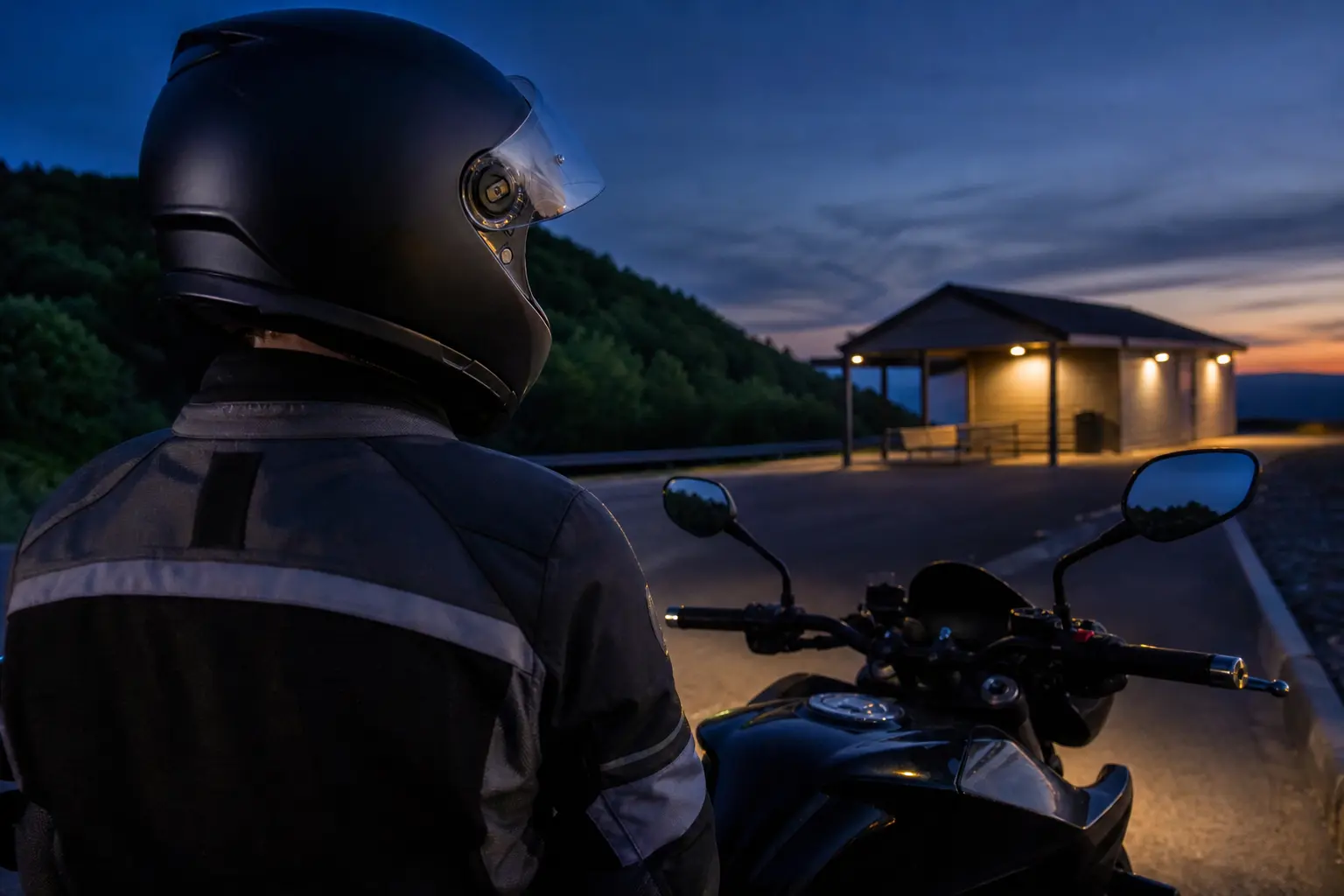
There is no award for completing a route with unsuitable eye protection. A conservative rider treats visual impairment as a meaningful change in the ride plan.
Consider delaying departure, changing eye protection, stopping, or arranging another option when:
- The only available eye protection is tinted and the route will involve limited light.
- The clear lens has scratches, haze, damage, or contamination that creates severe glare.
- The shield will not remain closed or securely mounted as intended.
- Goggles will not stay stable, or their strap or frame condition is questionable.
- Your prescription eyewear cannot sit normally within the helmet and protection setup.
- Persistent fogging or water accumulation blocks useful vision.
- Your eyes are watering, irritated, or too uncomfortable to keep a reliable view.
- Rain, glare, darkness, and fatigue are combining faster than you can comfortably manage.
If you are already moving, do not attempt a complicated gear change while riding. Find a legal, safe stopping location that gives you room away from traffic. Reassess calmly. If the problem is not solved by switching to a compatible, clear, clean setup, ending or altering the ride is the more responsible decision.
How Vojo Helps
Create a recurring Dusk Ride Gear Check in the Vojo Motorcycle Maintenance Tracker and add it to the motorcycle you will ride. Before a sunset departure, open the task and record whether your clear shield or goggles are clean, scratch-free in the forward view, securely fitted, compatible with any prescription eyewear, and packed or installed for the full route. If you identify fogging, a loose mechanism, or a compromised lens, log the issue in the task and mark the ride plan for correction instead of relying on memory. Over time, that history helps you spot repeat problems—such as a lens that keeps hazing or a spare shield that needs replacement—before the next after-dark ride.
Download Vojo on the App Store
FAQ
Should I wear tinted motorcycle goggles at night if the tint is light?
No. For motorcycle eye protection at night, use clear eye protection when outside light is limited. MSF guidance specifically advises against tinted eye protection in little available light and recommends clear lenses at night. (msf-usa.org) If the route may run into dusk, change to clear protection before visibility falls.
Is a windshield enough to protect my eyes at night?
Do not treat a windshield as a replacement for proper eye or face protection. Riding can expose you to wind, insects, and debris, and MSF identifies face shields and goggles as eye and face protection. (msf-usa.org) Use a helmet-compatible face shield or secure goggles as appropriate for your riding setup.
Can I ride after dark with a scratched face shield?
It depends on whether the scratch affects a clear, non-distracting view, but the conservative answer is to replace or avoid any shield whose scratches create glare, blur, or distraction. MSF says face shields should be free of scratches because scratches can refract light and blur vision. (msf-usa.org) Do not judge only in daylight; inspect the view in conditions that reveal glare.
Can I wear prescription glasses under my motorcycle helmet?
Many riders can, provided the helmet and eye protection give the glasses adequate room and do not interfere with fit, comfort, or a secure shield or goggle arrangement. The MSF Motorcycle Operator Manual says eye or face protection should allow room for needed eyeglasses or sunglasses. (msf-usa.org) Check the complete setup while stationary before riding.
What should I do if my face shield fogs at night?
Do not accept repeated fogging as normal. Stop in a safe location if fogging blocks your useful view, then follow the helmet or shield manufacturer’s approved guidance for ventilation, care, and compatible components. If you cannot restore a reliable view, change the plan rather than continuing with compromised vision.
Is clear eye protection only for fully dark conditions?
No. Clear protection is the sensible choice whenever outside light is becoming limited or the ride may run later than expected. Dusk, shade, rain, tunnels, and poorly lit roads can all reduce the margin that makes tinted protection workable. Install or carry compatible clear protection before the transition, not after it becomes a problem.
Safety disclaimer
Follow your motorcycle owner’s manual. If a procedure or specification is uncertain, consult a qualified mechanic before continuing.
Quick answers
Frequently asked questions
Should I wear tinted motorcycle goggles at night if the tint is light?
No. Use clear eye protection when outside light is limited. If your route may continue into dusk, change to clear protection before visibility falls.
Is a windshield enough to protect my eyes at night?
No. Do not treat a windshield as a replacement for helmet-compatible eye or face protection. Use a secure face shield or goggles appropriate for your helmet setup.
Can I ride after dark with a scratched face shield?
Use a conservative standard: if scratches create glare, blur, or distraction, do not rely on that shield for a night ride. Replace it or choose a clearer compatible option.
Can I wear prescription glasses under my motorcycle helmet?
Yes, if the helmet and eye protection allow your glasses to sit naturally without pressure, shifting, or interference with secure closure. Check the complete arrangement while parked.
What should I do if my face shield fogs at night?
Stop safely if fogging blocks your useful view. Follow the manufacturer’s approved guidance for ventilation and care; if clarity cannot be restored, change or end the ride.
Is clear eye protection only for fully dark conditions?
No. Clear protection is the safer choice whenever light is becoming limited, including dusk, rain, shaded roads, tunnels, and an uncertain return time.