
Emergency Braking Practice for Street Riders: Build a Controlled Refresher Plan Before You Need It
Use a conservative motorcycle emergency braking practice plan to refresh control, choose a safe space, inspect first, and know when training is the better call.
Fact-checked against cited official documentation
Reviewed against Fact-checked against MSF guidance on pre-ride preparation, regular emergency-braking practice, self-directed core-skill drills, and supervised rider-course progression..
Last updated September 23, 2026
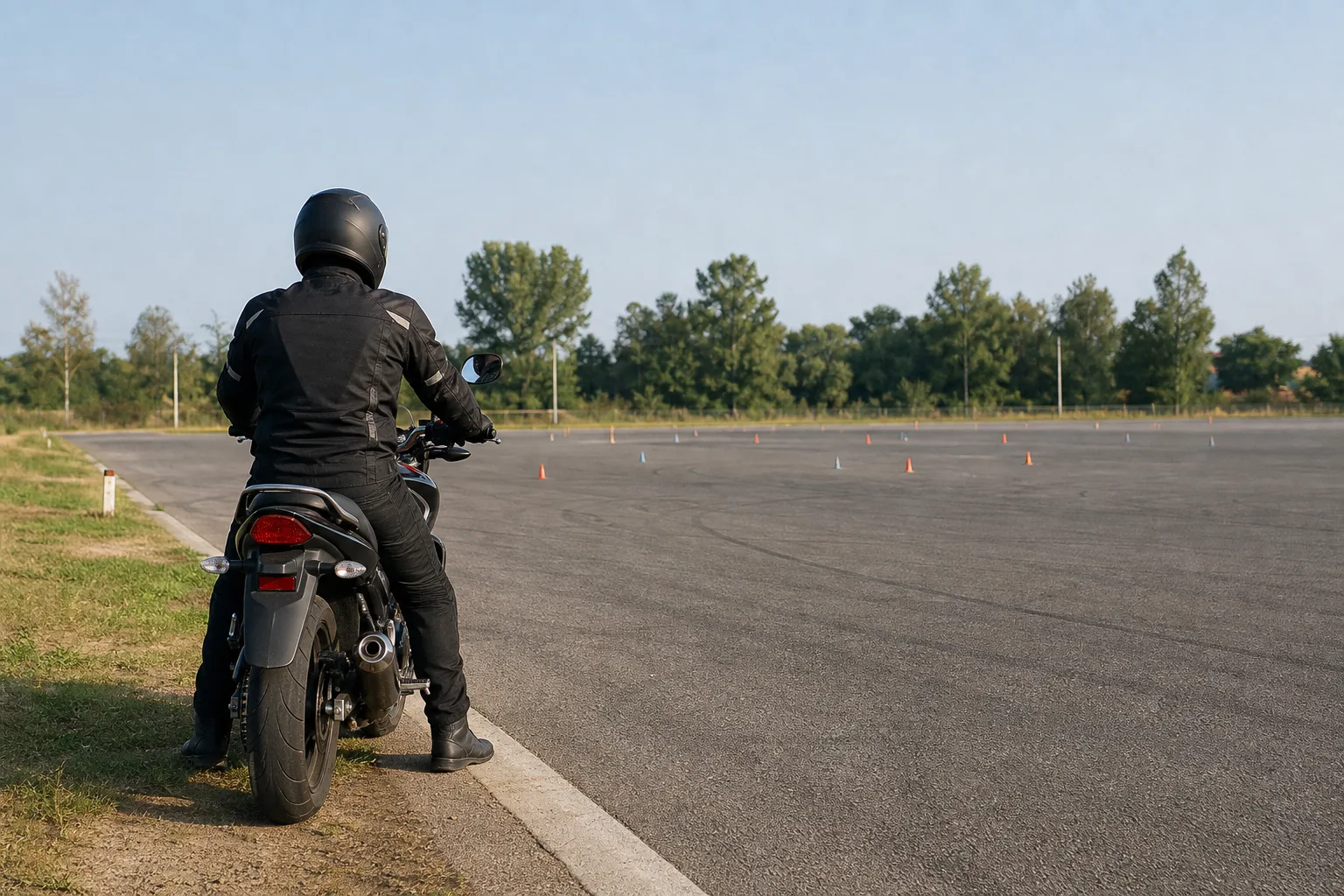
Emergency braking is not a skill to discover in traffic. A controlled refresher helps you reconnect with your motorcycle’s controls, your own attention, and a deliberate decision to stop before practice turns into pressure.
The Motorcycle Safety Foundation (MSF) places emergency braking among the core skills developed in supervised training and encourages riders to keep techniques sharp through regular practice. Its guidance also puts the owner’s manual and pre-ride checks ahead of riding exercises. (msf-usa.org)
This is a conservative plan for motorcycle emergency braking practice drills, not a performance test. Do not chase speed, distance, or a dramatic “maximum-braking” result. If anything about the motorcycle, surface, your gear, or your readiness is questionable, pause and resolve it before riding.
Start With the Motorcycle’s Instructions
Your motorcycle’s owner’s manual is the first authority for its controls, warnings, tire information, loading limits, and inspection requirements. Confirm the motorcycle is configured for its current use, including any passenger or luggage you may normally carry. If a warning light is present, a control feels abnormal, fluid is leaking, a tire appears damaged, or braking behavior is unfamiliar, do not use practice to diagnose the issue—arrange qualified inspection instead.
A short pre-ride review is especially valuable before skills work because repeated stopping increases the importance of a sound, predictable motorcycle. For a broader routine, use the Motorcycle Maintenance Guide.
| Before you practice | What to confirm | Conservative decision |
|---|---|---|
| Motorcycle condition | Follow the owner’s manual pre-ride items; look for obvious leaks, damage, loose items, or unusual warnings. | Stop if there is a concern you cannot confidently clear using the manual. |
| Tires and wheels | Check condition and the manufacturer-specified cold pressure for the motorcycle’s current load. | Do not practice on a questionable tire or wheel. |
| Controls and brakes | Confirm controls operate normally while stationary and the motorcycle responds as expected on a gentle familiar ride. | End the session if feel or response changes. |
| Rider equipment | Wear a helmet, eye protection, protective clothing, gloves, and sturdy over-the-ankle footwear. | Do not substitute casual clothing for a practice session. |
| Surface and space | Choose a legal, low-traffic, clean, dry, level area with clear run-off and no bystanders. | Leave if other traffic, debris, poor visibility, or surface changes remove your margin. |
MSF’s current rider-course information describes a gradual progression from foundational control to swerving and emergency braking, with RiderCoach feedback. That progression is a useful reminder: practice should be structured, not improvised. (msf-usa.org)
Choose a Practice Space That Lets You Stop Early
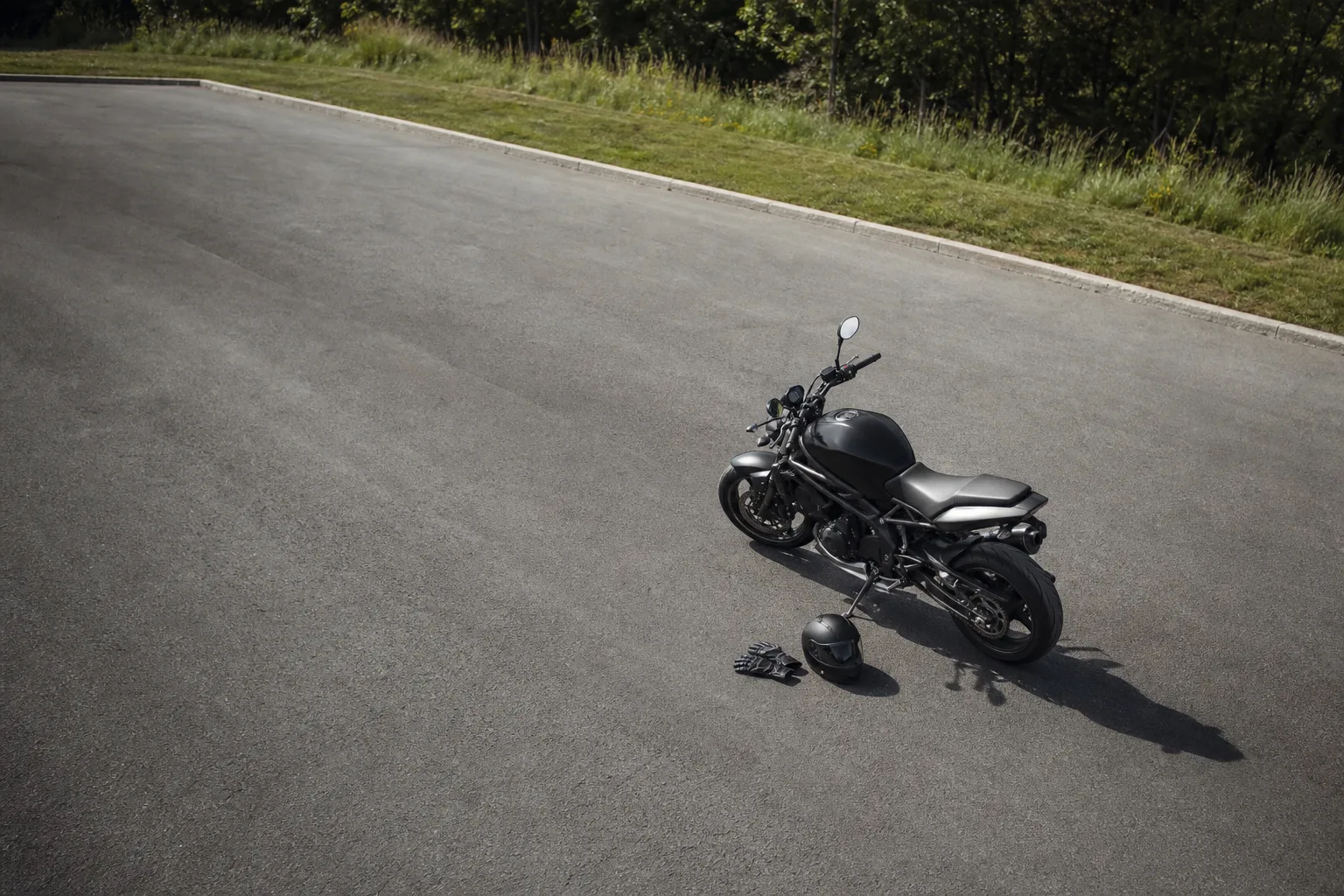
A good location is intentionally boring: legal to use, away from through traffic and pedestrians, free of unexpected entrances, and large enough that you never feel compelled to continue toward an obstacle. Avoid public-road shoulders, mixed-use parking aisles, slopes, painted markings, loose gravel, wet pavement, and areas where vehicles may suddenly appear.
Set a personal rule before starting: either rider uncertainty or changing conditions ends the drill. That rule matters more than finishing a planned number of repetitions.
Bring only what supports calm practice. Water, a charged phone, and a simple way to mark a start area can be useful. Avoid making a crowd, filming for social pressure, or inviting other riders to turn the session into comparison.
Emergency Braking Practice Checklist
- Read the relevant owner’s-manual warnings and pre-ride guidance for your model.
- Confirm the motorcycle is unloaded or loaded exactly as you intend to practice; secure all cargo.
- Inspect the motorcycle using the manual and stop for any unresolved brake, tire, wheel, control, fluid, or warning-light concern.
- Wear complete protective riding gear, including helmet and eye protection.
- Select a legal, dry, clean, level practice space with generous clear room beyond the stopping area.
- Walk the area first; reassess for sand, oil, gravel, standing water, painted surfaces, potholes, traffic paths, and pedestrians.
- Begin with familiar, low-demand control work and only continue while each pass feels calm and repeatable.
- Keep the session short enough to preserve attention; take a break at the first sign of fatigue, frustration, heat stress, or loss of focus.
- Stop immediately for an unexpected tire, brake, chassis, control, or electronic-system behavior.
- Choose a formal hands-on course if you are returning after a long break, changing motorcycle types, lacking confidence, or struggling to make progress.
Build a Refresher, Not a Test
Use a staged session rather than a single “hard stop” attempt. Start by becoming settled on the motorcycle and confirming the space remains suitable. Then rehearse a calm approach, a straight and deliberate stop, and a full reset before repeating. Maintain a wide safety margin at every stage.
Treat every repetition as a complete decision cycle. Before moving, identify the point where the exercise ends, the clear space beyond it, and the condition that would make you abandon the pass. After stopping, take enough time to reset your posture, attention, and surroundings. Repetition is useful only while the setup stays consistent and the rider remains deliberate.
Progress should come from stability, not from chasing a number. Do not shorten the available margin, raise the pace, or add another task merely because one pass felt comfortable. A change in surface, traffic, wind, light, temperature, fatigue, or concentration is a reason to hold the current level or finish. If you cannot explain what you are changing and why, keep the exercise simple.
The useful question is not “How close can I get to the limit?” It is “Can I recognize a need to stop, act without panic, and remain composed?” If the answer is not clearly yes, reduce the task or move to supervised training.
Do not attempt to reproduce a drill from memory if you are unsure of its setup or technique. MSF offers self-directed practice resources for refreshing core skills, while also identifying advanced training as the best route for learning and developing new skills. (msf-usa.org)
Use Clear Stop Rules During Every Session
A useful practice plan decides in advance what ends the session. This prevents “one more try” from overriding information that should be taken seriously. Stop for any change in brake feel, tire behavior, steering, warning lights, fluid leakage, unusual sound, or control operation. Stop as well when the practice area is no longer predictable or when another person enters the space.
Rider condition matters just as much as motorcycle condition. End the session if attention is drifting, movements feel rushed, frustration appears, or fatigue makes the next repetition less deliberate than the previous one. More repetitions are not automatically better; a short, controlled refresher can be more useful than continuing after the quality of attention declines.
| What changed? | Immediate response | Next step |
|---|---|---|
| Surface, traffic, visibility, or available space | Pause and leave the exercise area if the original margin is gone. | Return only when a legal, predictable location is available. |
| Motorcycle feel, warning, leak, sound, or control response | End riding rather than repeating the drill to investigate. | Use the owner’s manual and qualified inspection as appropriate. |
| Rider fatigue, tension, heat stress, or loss of focus | Stop the session and recover away from moving traffic. | Reschedule; do not treat the remaining repetitions as a target. |
| The exercise feels confusing or inconsistent | Reduce the task and do not improvise a more demanding version. | Choose supervised training for structured feedback. |
These rules turn the session into a controlled learning decision instead of an endurance test. They also make the post-session note more meaningful: you can record not only what you completed, but why you chose to continue, pause, or seek help.
Know When to Choose Formal Training
A qualified course is the stronger choice when you are new to motorcycling, returning after time away, adapting to a heavier or unfamiliar motorcycle, or feeling tense around braking. It also makes sense after a close call that has made you hesitant, or whenever you want direct feedback rather than self-evaluation.
Formal training supplies a controlled range, an organized progression, and coaching. MSF’s Basic RiderCourse specifically includes on-motorcycle instruction that progresses through stopping, turning, swerving, and emergency braking. (msf-usa.org)
Even experienced riders benefit from treating practice as maintenance for decision-making. The aim is to build options before traffic demands one—not to prove that you can override your margin.
After the Session: Record What Changed
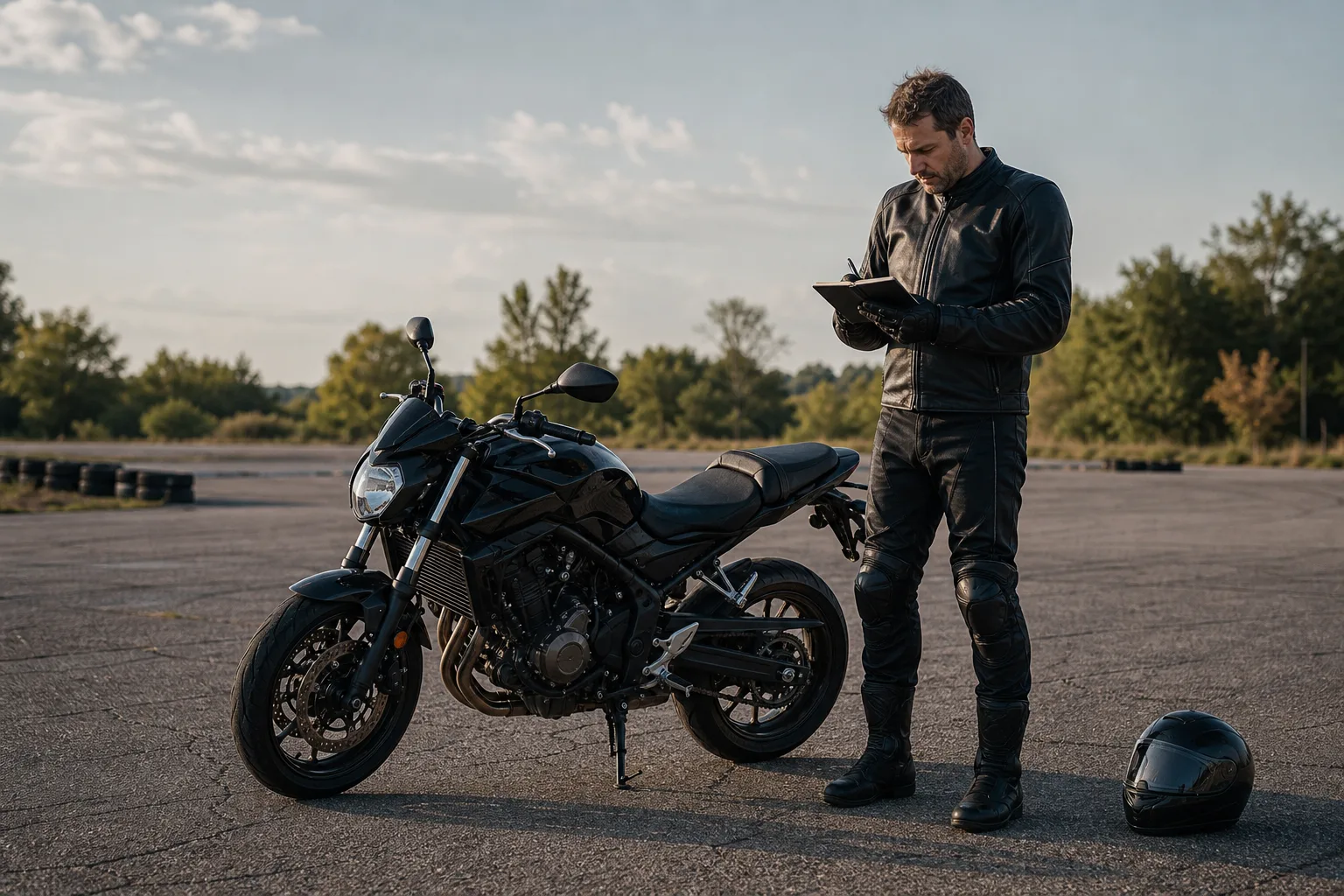
When you finish, let the motorcycle cool as required by its manual and make a brief note: location conditions, what felt routine, what prompted a pause, and whether any motorcycle concern emerged. A note prevents vague impressions from becoming false confidence and gives you a reason to schedule coaching or inspection when appropriate.
Keep the note factual. Record the date, motorcycle and load, surface condition, approximate session length, and the stop rule that mattered most. Avoid turning the record into a scorecard based on speed or stopping distance unless a qualified course specifically asks you to measure something. The purpose is to recognize patterns: whether confidence is returning, whether the same hesitation persists, and whether equipment or coaching deserves attention before the next ride.
If the session revealed a genuine equipment concern, do not keep practicing to “see if it goes away.” Refer to the owner’s manual and use a qualified technician or authorized service provider when the condition calls for it.
How Vojo Helps
Create a recurring skills-refresher entry in the Vojo motorcycle ride app, then attach a simple pre-practice checklist and a post-session note. Before the next session, review the prior surface conditions, confidence notes, and any motorcycle concerns; if something was unresolved, convert it into a maintenance task instead of riding around it.
Download Vojo on the App Store
Related Posts
- The Two-Layer Motorcycle Pre-Ride Check
- Motorcycle Rain Riding: A Conservative Go/No-Go and Low-Grip Risk Checklist
- First Motorcycle Ride With a Passenger: A Conservative Readiness Checklist
Quick answers
Frequently asked questions
How often should I practice emergency braking on a motorcycle?
Use a recurring refresher rhythm that fits your riding frequency and confidence, rather than waiting for a close call. Keep sessions conservative and stop whenever conditions, concentration, or motorcycle condition are not right.
Can I practice emergency braking on the street?
A controlled, legal, low-traffic practice area is the safer choice. Public roads add unpredictable traffic, entrances, surface changes, and pressure that defeat the purpose of a calm refresher.
Should I practice if my motorcycle has ABS?
ABS does not replace rider training or a model-specific pre-ride check. Read the owner’s manual for your motorcycle, make sure no warning condition is present, and use a conservative practice plan or supervised training.
What should I do if braking feels different during practice?
End the session. Do not use repeated drills to diagnose an unfamiliar brake, tire, wheel, control, or warning-light issue. Consult the owner’s manual and arrange qualified inspection when needed.
Is a rider course worthwhile if I already have a license?
Yes. A formal course can provide structure, a controlled range, and RiderCoach feedback. It is particularly valuable after a long break, a motorcycle change, or any loss of confidence around braking.